


Light Industrial Staffing Industry Growth
segments of clerical and light industrial staffing. And, as new forms of temporary work have emerged, the technical sector contributes disproportionately to the industry’s growth in comparison to the clerical and light-industrial sectors.
The temporary staffing industry: growth imperatives and limits to contingency, N Theodore, 2002
What is Temp-to-Hire Staffing?
Benefits of Temp-to-Hire Staffing

- Reduced Hiring Risk: Employers can evaluate candidates in a real-world setting, minimizing the chances of a poor hiring decision.
- Pathway to Permanent Employment: Job seekers have the opportunity to demonstrate their skills and fit within the company, increasing their chances of securing a permanent position.
- Cost Efficiency and Flexibility: This model allows employers to manage workforce needs more effectively, adjusting staffing levels based on demand without the long-term commitment of direct hires.
Key Considerations for Temp-to-Hire Staffing
- Performance Evaluation Metrics: Establish clear criteria for assessing candidate performance during the trial period.
- Cultural Fit Assessment: Evaluate how well candidates align with the company's values and work environment.
- Importance of Communication: Maintain open lines of communication between employers, staffing agencies, and candidates to ensure expectations are clear.
Differences from Other Staffing Models
- Temporary Staffing: In this model, workers are hired for short-term assignments without the option for permanent placement. Employers do not evaluate these workers for long-term roles.
- Direct Hire Staffing: This approach involves hiring candidates directly for permanent positions without a trial period. It carries a higher risk for employers, as they must rely solely on interviews and resumes.
What Is Temp-to-Hire Staffing in Light Industrial Work?
How Does Temp-to-Hire Differ from Temporary and Direct Hire Staffing?
- Characteristics of Temporary Staffing: Workers are engaged for short-term projects without the potential for permanent employment.
- Characteristics of Direct Hire Staffing: Candidates are hired directly for permanent roles, which can lead to higher costs and risks for employers.
- Comparison of Hiring Processes: Temp-to-hire involves a trial period, while temporary staffing does not assess long-term fit, and direct hire skips the evaluation phase entirely.
Understanding the Temp-to-Hire Process in Light Industrial
- Manufacturing Operators: Skilled workers who operate machinery and ensure production efficiency.
- Warehouse Associates: Individuals responsible for inventory management and order fulfillment.
- Quality Control Inspectors: Professionals who assess products for quality and compliance with standards.
What Are the Key Benefits of Temp-to-Hire Staffing for Employers?
- Cost Efficiency: Reduces the financial burden of hiring mistakes by allowing for a trial period.
- Flexibility in Workforce Management: Employers can adjust staffing levels based on current needs without long-term commitments.
- Access to Skilled Labor: Temp-to-hire staffing provides access to a pool of qualified candidates who can be evaluated before permanent hiring.
How Does Temp-to-Hire Reduce Hiring Risks and Improve Workforce Fit?
- Trial Period for Evaluation: Employers can assess a candidate's performance and fit within the company culture before making a permanent offer.
- Performance Assessment Metrics: Clear criteria for evaluation help ensure that only the most suitable candidates are considered for permanent roles.
- Structured Onboarding Process: A well-defined onboarding process can enhance the candidate's integration into the company, improving overall workforce fit.
Why Is Temp-to-Hire Preferred in Wisconsin's Manufacturing and Hospitality Industries?
- Risk Mitigation: Employers can evaluate candidates in real work environments, reducing the likelihood of hiring errors.
- Access to Skilled Labor: The model allows companies to tap into a pool of skilled workers who may be seeking temporary opportunities with the potential for permanent employment.
- Flexibility in Staffing: The ability to adjust staffing levels based on demand is crucial in industries with fluctuating workloads.
What Is the Step-by-Step Temp-to-Hire Staffing Process?
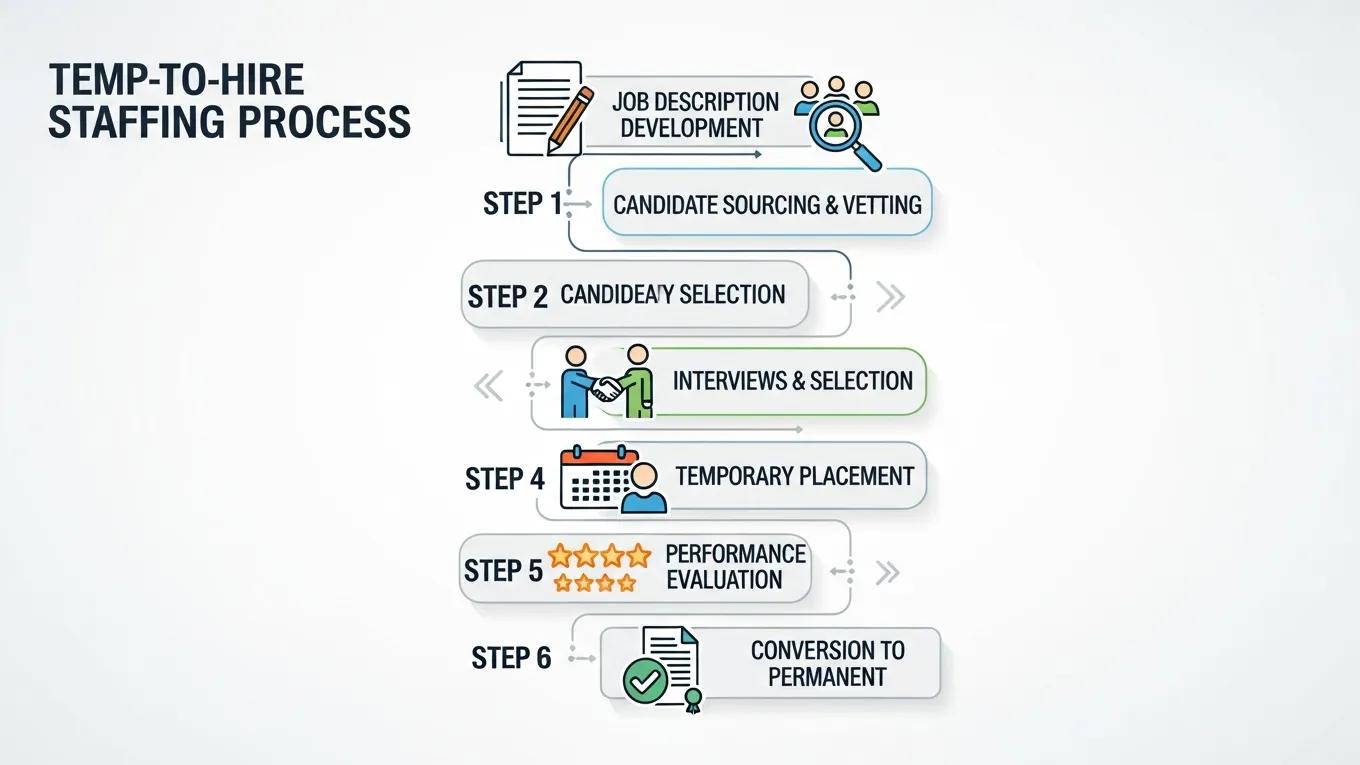
- Job Description Development: Employers create detailed job descriptions outlining the skills and qualifications required.
- Candidate Sourcing: Staffing agencies identify and present qualified candidates for consideration.
- Interviews and Selection: Employers interview candidates to assess their fit for the role.
- Trial Employment Period: Selected candidates work on a temporary basis, allowing employers to evaluate their performance.
- Permanent Offer: If the candidate meets expectations, a permanent job offer is extended.
How Are Candidates Screened and Matched to Light Industrial Jobs?
- Screening Methods: Staffing agencies utilize various methods, including interviews, skills assessments, and background checks, to evaluate candidates.
- Matching Candidates to Job Roles: Agencies consider candidates' skills, experience, and preferences to match them with suitable job opportunities.
What Is the Typical Duration and Evaluation Period in Temp-to-Hire Contracts?
How Can Job Seekers Benefit from Temp-to-Hire Opportunities in Light Industrial Staffing?
- Pathway to Permanent Employment: Demonstrating skills during the trial period can lead to a permanent position.
- Diverse Job Opportunities: Temp-to-hire roles provide exposure to various companies and industries, enhancing career prospects.
- Career Guidance from Staffing Agencies: Staffing agencies often offer support and resources to help job seekers navigate their career paths.
What Should Job Seekers Expect During the Temp-to-Hire Employment Period?
- Evaluation Process: Employers will assess their performance based on established criteria.
- Duration of Temp-to-Hire Period: Typically lasting 8 to 12 weeks, this period allows candidates to showcase their skills and fit within the company.
How Does Temp-to-Hire Lead to Permanent Employment in Wisconsin?
- Demonstrating Skills During Temp Period: Candidates have the opportunity to showcase their abilities and work ethic.
- Employer Evaluation Process: Employers assess candidates based on their performance and cultural fit, leading to informed hiring decisions.
Temp-to-Hire Job Conversion Rates
The large role that this small industry plays in the macroeconomy is often overlooked. We examine the share of temp-to-hire orders by broad occupation. While the share obtaining jobs with the client is considerably higher in temp-to-hire arrangements than in traditional temporary help assignments, it is still far from 100 percent.
Worker Hard and Soft Skills and Labor Market Outcomes: A Lens through the Temporary Help Industry over the Business Cycle, CJ Heinrich, 2020